The Bunker That Ate Gumbley
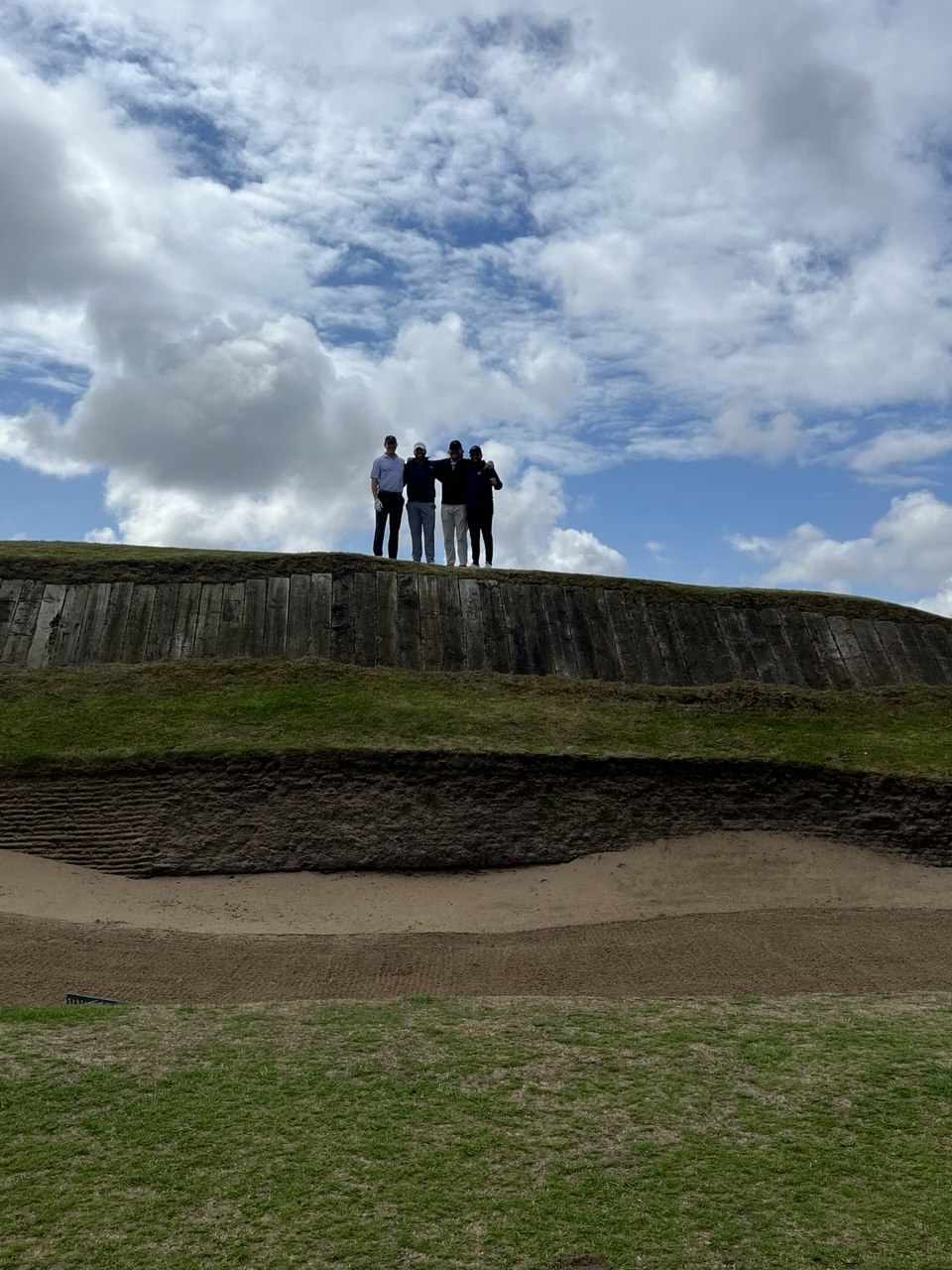
There are bunkers, and then there are bunkers. The kind that don't just catch a wayward shot — they swallow it. They have names. They have lore. They have railway sleepers holding the whole thing together because gravity alone can't be trusted.
Gumbley's is one of those.
Let's start with what you're actually looking at.
Southport & Ainsdale's 16th hole is a par-5 that plays straight into the prevailing wind off the Irish Sea — 506 yards of dunes and heather that James Braid stitched together in 1924 after a new road split the original course. Braid built six new holes and redesigned the other twelve, and the 16th is his masterpiece: a blind second shot over a massive sand ridge, with a sleeper-faced bunker cut into the heart of it that rises 25 feet above the fairway.
The sleepers — old railroad ties, horizontal and weathered — aren't decorative. They're structural. Without them, that dune face would slump into something merely difficult instead of genuinely terrifying. With them, it's a wall. A wall of sand. That you have to hit over.
If you can't reach the green in two — and most can't, into that wind — you're laying up short of the bunker and hoping your third shot finds a green you still can't see. It's blind all the way home.
The kind of hole that, as one reviewer put it, "simply wouldn't be built today." And that's exactly why it matters.
Who Was Gumbley?
The name is the best part of this story.
"Gumbley" wasn't the architect. He wasn't a club secretary or a greenkeeper. He was just a guy — a member, or maybe a visitor — who had a very bad day on the 16th. The kind of bad day where you don't just visit the bunker. You move in.
According to club lore, Gumbley spent so long trying to dig his ball out of that 25-foot sand face that the members started calling it his bunker. "Gumbley's." And it stuck. The name spread from the bunker to the entire hole.
I love this. Not a corporate name. Not a marketing department. Just a man, his bad luck, and a golf club with a sense of humor about it.
There's something deeply English about naming your most intimidating hazard after the guy who failed to escape it. Americans would've named it "Eagle's Talon" or "The Gauntlet" and laminated a description card. At S&A, they just told the story until it became fact.
The Braid Connection
James Braid — five-time Open champion, member of the Great Triumvirate alongside Vardon and Taylor — designed or remodeled over 200 courses. But his work at S&A represents something specific: a championship test that doesn't need to announce itself.
S&A hosted the Ryder Cup in 1933 and 1937. It sits in the same stretch of Lancashire coastline as Royal Birkdale, Hillside, and Formby — golf's densest collection of elite links. It doesn't get the spotlight that Birkdale gets. It doesn't have the Open Championship pedigree. But the 16th hole, Gumbley's, is as memorable as anything on that coast.
Blind shot. Prevailing wind. A 25-foot wall of sleepers and sand with a dead man's name on it. You either clear it or you join the club.
Play It If You Can
You can get on S&A as a visitor. It's not Royal Birkdale prices, and it's not Royal Birkdale crowds. The course is a proper links — firm, fast, shaped by wind more than earthmoving — and the 16th is the hole you'll tell people about afterward.
When you do, and you're standing in the fairway staring up at those sleepers, remember: the best you can hope for is to not become a name.